

Prayagraj A City of Ancient Heritage , Have you ever walked through a place where every stone whispers stories from millennia past? Where ancient scriptures, mighty empires, spiritual awakening, and modern India’s birth all converge? Welcome to Prayagraj—a city that isn’t just old, but ancient in the truest sense, carrying within its soul the accumulated wisdom and experiences of countless generations.
Most people know Prayagraj for the Kumbh Mela or the sacred Sangam, but there’s so much more beneath the surface. This isn’t merely a city; it’s a living museum, a spiritual powerhouse, and a testament to India’s incredible ability to preserve tradition while embracing change. From the Vedic period to the present day, Prayagraj has been a witness to—and often a participant in—some of the most defining moments of Indian civilization.
Think of Prayagraj as a multilayered archaeological site where each era has left its imprint without completely erasing what came before. The result? A fascinating tapestry where ancient Hindu temples stand alongside Mughal forts, British colonial buildings neighbor traditional markets, and modern infrastructure coexists with age-old spiritual practices. Let’s embark on a journey through time and discover what makes Prayagraj one of India’s most heritage-rich cities.
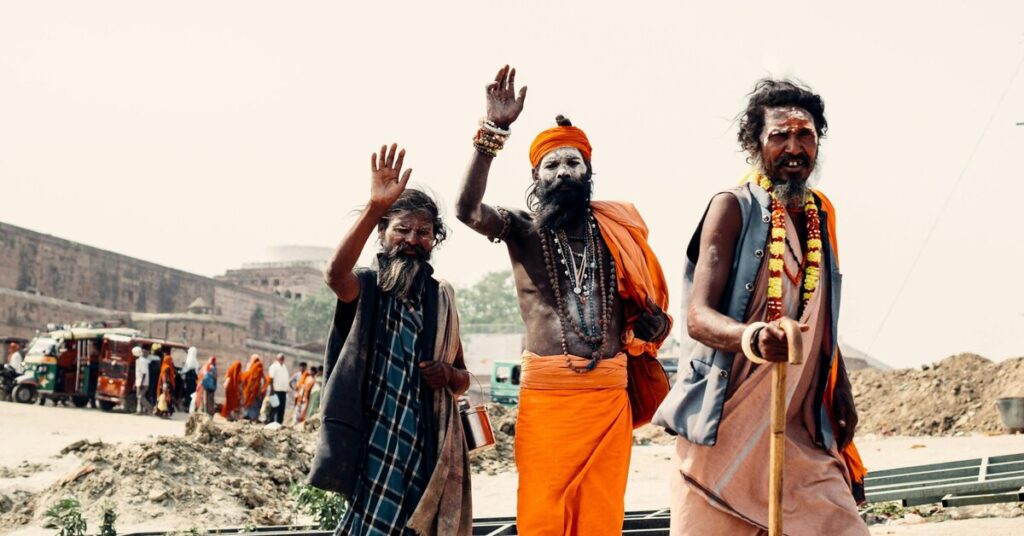
The Ancient Origins of Prayagraj
Prayag in Vedic Literature and Hindu Mythology
Long before recorded history, Prayagraj—then known simply as Prayag—was already considered sacred. The name “Prayag” itself comes from Sanskrit, meaning “place of sacrifice” or “confluence,” referring to the meeting point of the Ganges, Yamuna, and the mythical Saraswati rivers.
Ancient Vedic texts, composed thousands of years ago, mention Prayag as one of the holiest tirthas (pilgrimage sites) in Hindu cosmology. The Rigveda, arguably the world’s oldest religious text, contains references to the sacred rivers that meet here. The Puranas—ancient Hindu texts containing mythology, legends, and cosmology—describe elaborate rituals performed at Prayag by gods, sages, and kings.
According to Hindu mythology, Lord Brahma, the creator of the universe, performed the first-ever yajna (fire sacrifice) at Prayag after creating the cosmos. This mythological event established Prayag as “Tirtha Raj”—the king of all pilgrimage sites. Can you imagine the weight of such ancient sanctity? It’s a place where, according to belief, heaven and earth literally touch.
Archaeological Evidence of Ancient Settlements
Mythology aside, archaeological evidence confirms human settlements in this region dating back to around 1000 BCE, possibly earlier. Excavations have uncovered pottery, tools, and remains indicating a thriving civilization existed here during the late Vedic period.
The strategic location at the confluence of two major rivers made this an ideal settlement—water for agriculture, transportation routes, and natural defense. Ancient trade routes connecting the Gangetic plains to central and southern India likely passed through Prayag, making it an important commercial hub even in antiquity.
Interestingly, the region’s fertile alluvial soil supported agriculture that fed growing populations, allowing culture, arts, and spiritual practices to flourish. You can’t have philosophy and spirituality on an empty stomach, after all! The material prosperity provided the foundation for Prayag’s spiritual and intellectual development.
The Significance of Triveni Sangam Through the Ages
The Triveni Sangam has been the spiritual heart of Prayagraj for millennia. But why is a river confluence considered so sacred? In Hindu philosophy, rivers are not mere water bodies but living goddesses. The Ganges represents purity and salvation, the Yamuna symbolizes devotion, and the Saraswati (though invisible) embodies knowledge and wisdom.
The meeting of these three divine streams creates a point of extraordinary spiritual potency. Ancient texts describe how bathing at the Sangam during certain auspicious times cleanses the soul of accumulated karmas and breaks the cycle of rebirth. This belief hasn’t weakened over thousands of years—if anything, it has strengthened, drawing millions to its banks even today.
Historical accounts from Chinese travelers like Hiuen Tsang (7th century CE) describe the Sangam as a major pilgrimage site even then, with thousands of devotees taking holy dips and performing rituals. The continuity of this tradition across millennia is remarkable—how many places in the world can claim such unbroken spiritual significance?
Prayagraj Through the Lens of History
The Mauryan Empire and Ashoka’s Legacy
Fast forward to the 3rd century BCE, when the mighty Mauryan Empire controlled much of the Indian subcontinent. Emperor Ashoka, one of history’s most remarkable rulers, left an indelible mark on Prayagraj that survives to this day.
The Famous Ashoka Pillar
Standing within the Allahabad Fort is one of Ashoka’s famous pillars—a monumental sandstone column erected around 232 BCE. This isn’t just any pillar; it’s a masterpiece of ancient engineering and artistry, standing over 10 meters tall and weighing several tons.
What makes it extraordinary? First, the pillar was quarried in Chunar (near Varanasi) and transported over 100 kilometers to Prayagraj—an incredible feat without modern machinery. Second, the pillar’s surface is so highly polished that it still gleams after 2,300 years! The technology to achieve such polishing was subsequently lost and only rediscovered in modern times.
The pillar bears inscriptions from three different periods: Ashoka’s original edicts promoting Buddhist dharma and moral governance, a 4th-century inscription by Samudragupta describing his military conquests, and a later inscription by Jahangir. It’s like a multi-generational guest book, with each powerful ruler adding their message across centuries.
Buddhist Influence in Ancient Prayagraj
Under Ashoka, Buddhism flourished in Prayagraj. The emperor’s conversion to Buddhism after the bloody Kalinga War transformed him from a conqueror to a dharma-preacher, and Prayagraj became an important Buddhist center.
Hiuen Tsang, the Chinese Buddhist monk who traveled through India in the 7th century CE, wrote extensively about Prayagraj. He described numerous Buddhist monasteries and stupas, suggesting a significant Buddhist population. Though most of these structures haven’t survived, archaeological excavations occasionally uncover Buddhist artifacts, confirming this historical Buddhist presence.
The fascinating aspect of Prayagraj’s history is its religious pluralism—Hindu spiritual traditions and Buddhist practices coexisted, sometimes influencing each other. This set a pattern of religious tolerance that would define the city through subsequent centuries.
Medieval Period: From Hindu Kingdoms to Muslim Rule
The Gupta Period: Golden Age of Arts
The Gupta Empire (4th-6th centuries CE) is often called the Golden Age of classical Indian civilization, and Prayagraj participated in this cultural renaissance. Arts, literature, science, and Sanskrit learning flourished.
The Samudragupta inscription on Ashoka’s pillar lists Prayagraj among the important cities of his vast empire. The region’s economic prosperity during this period supported poets, scholars, and artists. Sanskrit drama, poetry, and scientific treatises were composed in centers of learning throughout the Gangetic valley, including Prayagraj.
The famous mathematician and astronomer Aryabhata lived during this era, and while his exact birthplace is debated, he worked in the region that includes Prayagraj. This intellectual ferment made Prayagraj not just a spiritual center but also a hub of rational inquiry and scientific thinking.
Delhi Sultanate and Early Islamic Influence
The 12th-13th centuries brought dramatic changes as Muslim rulers established control over North India. Prayagraj came under the Delhi Sultanate, introducing Islamic culture, architecture, and administration to the region.
This transition wasn’t always smooth—temples were sometimes destroyed, and new mosques were built using materials from Hindu structures. However, over time, a complex cultural synthesis began. Local Hindu rulers sometimes allied with Muslim sultanates, and trade flourished as Prayagraj remained an important river port and commercial center.
The medieval period also saw the rise of the Bhakti movement—devotional Hinduism that emphasized personal devotion over ritual orthodoxy. Saints and poets traveled through Prayagraj, composing devotional songs in local languages rather than Sanskrit, democratizing spirituality. This movement would profoundly influence Prayagraj’s cultural character.
The Mughal Era: Architectural Splendor and Cultural Fusion
Akbar’s Grand Vision: The Allahabad Fort
The Mughal period represents perhaps Prayagraj’s most visible heritage layer. Emperor Akbar, with his genius for statecraft and architecture, recognized Prayagraj’s strategic and spiritual importance. In 1583, he ordered the construction of a massive fort on the banks of the Yamuna, close to the Sangam.
The Allahabad Fort isn’t just a military structure—it’s a statement of power, architectural excellence, and cultural synthesis. Built using red sandstone transported from Rajasthan, the fort combines Mughal military architecture with elements respecting the site’s Hindu sanctity.
Within the fort complex, Akbar preserved the Akshaya Vat (immortal banyan tree), considered sacred by Hindus since ancient times. He also ensured the Ashoka Pillar remained protected. This wasn’t mere tolerance—it was a deliberate policy of cultural integration that defined Akbar’s reign. The fort served multiple purposes: military garrison, administrative center, treasury, and a symbol that the Mughal Empire respected India’s ancient spiritual traditions.
Today, much of the fort is under Indian Army control, but the accessible portions offer a glimpse into Mughal grandeur. Walking through its gates and corridors, you’re literally stepping through 400 years of history.
Jahangir and the Khusro Bagh Complex
Emperor Jahangir’s relationship with Prayagraj is more tragic. His eldest son, Prince Khusro, rebelled against him and was eventually imprisoned. After Khusro’s death (possibly murdered), Jahangir built a beautiful garden complex—Khusro Bagh—containing the tombs of Khusro, his mother Shah Begum, and his sister Sultan Nithar Begum.
Khusro Bagh is a masterpiece of Mughal garden architecture and Indo-Persian tomb design. The three sandstone mausoleums, each with intricate geometric patterns, floral motifs, and calligraphy, represent the pinnacle of Mughal artistic achievement. The gardens, laid out in the classic char-bagh (four-garden) style, once had fountains, water channels, and fruit trees.
What makes Khusro Bagh poignant is its story—a father’s grief transformed into architectural beauty. Today, it serves as a peaceful oasis in bustling Prayagraj, where visitors can contemplate mortality, beauty, and the complex human emotions that drive creation.
Persian and Hindu Cultural Synthesis
The Mughal period witnessed unprecedented cultural synthesis in Prayagraj. Persian, the court language, influenced local dialects. Mughal painting styles blended with indigenous artistic traditions. Music saw the development of new ragas and fusion instruments.
The local economy flourished under Mughal administration. Prayagraj became an important administrative center (subah), with efficient tax collection, justice systems, and infrastructure development. Trade networks connected the city to Central Asia, Persia, and even Europe through intermediaries.
Interestingly, Hindu scholars found patronage at Mughal courts. Sanskrit works were translated into Persian, and Islamic theological texts were studied by Hindu intellectuals curious about different philosophical traditions. This intellectual exchange, though sometimes overstated by modern commentators, did create pockets of genuine dialogue and mutual respect.
Prayagraj During British Colonial Rule
Renaming from Prayag to Allahabad
The British East India Company established control over Prayagraj in 1801, marking another significant transition. Emperor Akbar had named the city “Ilahabad” (City of God), which the British corrupted to “Allahabad.” This name stuck for over 200 years until 2018, when it was officially renamed Prayagraj, restoring its ancient identity.
The British recognized Allahabad’s strategic importance and developed it into a major administrative center. They built military cantonments, civil lines, and extensive railway networks connecting the city to Calcutta (now Kolkata), Bombay (now Mumbai), and Delhi.
The 1857 Revolt: A Center of Resistance
One of Prayagraj’s proudest historical moments came during the 1857 uprising against British rule—often called the First War of Independence by Indians. The city became a major center of rebellion, with local rulers, soldiers, and common people rising against colonial oppression.
The British recaptured Allahabad after fierce fighting and exacted brutal revenge. Hundreds were executed, and the city suffered significant destruction. However, this resistance planted seeds of national consciousness that would eventually grow into India’s independence movement.
The aftermath of 1857 saw British rule become more direct and systematic. The fort became a major British garrison, and extensive “pacification” programs were implemented. Yet the spirit of resistance never truly died—it merely transformed into more organized political movements.
Colonial Architecture and Urban Planning
Despite the oppressive political reality, British rule left architectural legacy worth noting. The Gothic Revival All Saints Cathedral (1870s) stands as a beautiful example of Victorian ecclesiastical architecture—though it’s ironic that churches in Gothic style were built in tropical India!
The Allahabad High Court, established in 1866, is housed in a magnificent Victorian building symbolizing judicial authority. The Civil Lines area, with its wide tree-lined avenues, sprawling bungalows, and planned layout, represents colonial urban planning philosophy—separate from “native” quarters, designed for European comfort.
The University of Allahabad, established in 1887, became one of India’s premier educational institutions. Its colonial-era buildings, with their imposing facades and spacious courtyards, still house thousands of students pursuing higher education.
Prayagraj in India’s Freedom Struggle
The Nehru Connection: Political Hub of Independence Movement
No discussion of Prayagraj’s heritage is complete without mentioning the Nehru family. Motilal Nehru, a prominent lawyer and nationalist leader, made Allahabad his home. His son, Jawaharlal Nehru, who would become India’s first Prime Minister, was born and raised here.
Anand Bhawan, the Nehru family residence, became a nerve center of the independence movement. The Indian National Congress held crucial meetings here. Leaders like Mahatma Gandhi, Sardar Patel, Maulana Azad, and countless others gathered in its halls to plan strategies for India’s freedom.
The Nehru family’s contribution went beyond hosting meetings—they donated their ancestral home (Swaraj Bhawan) to the Congress party and personally participated in civil disobedience movements, facing imprisonment multiple times. Young Indira (later Prime Minister Indira Gandhi) grew up in this atmosphere of political activism and national service.
Today, Anand Bhawan is a museum that beautifully preserves this heritage. Walking through its rooms, seeing personal belongings, photographs, and letters, you feel connected to the individuals who shaped modern India. It’s history you can touch, feel, and emotionally connect with.
The Allahabad High Court: Judicial Heritage
The Allahabad High Court holds special significance in Indian legal history. Established in 1866, it’s one of India’s oldest and most respected high courts. Many of India’s finest legal minds practiced here, including Motilal Nehru.
The High Court building itself is an architectural marvel—massive, imposing, with Victorian Gothic elements that commanded respect and authority. Its extensive library houses rare legal manuscripts and books dating back centuries.
Post-independence, the Allahabad High Court has delivered several landmark judgments that shaped Indian constitutional law. Its judgments on fundamental rights, election law, and administrative matters have been cited across India’s judicial system.
Historic Congress Sessions and Declarations
The Indian National Congress, the primary organization leading India’s freedom struggle, held several historic sessions in Allahabad:
The 1888 session saw moderate and extremist factions within the Congress trying to find common ground. The 1920 session, under Mahatma Gandhi’s influence, transformed Congress from an elite debating society into a mass movement.
Perhaps most significantly, at the Nehru Park in Allahabad, Jawaharlal Nehru hoisted the tri-color flag (then the Congress flag) on January 26, 1930, declaring “Purna Swaraj” (complete independence) as India’s goal. This date—January 26—later became India’s Republic Day.
These weren’t just political events; they were moments when ideas that would shape a nation were articulated, debated, and accepted. Prayagraj provided the physical and intellectual space for modern India’s birth.
Religious and Spiritual Heritage
Tirtha Raj: The King of Pilgrimage Sites
Prayagraj’s designation as “Tirtha Raj” isn’t mere hyperbole. Hindu scriptures consistently rank the Sangam among the most sacred sites, sometimes placing it above even Varanasi or Haridwar.
The spiritual concept is fascinating: bathing at different tirthas cleanses different karmas, but bathing at Prayag is believed to provide comprehensive spiritual purification. Ancient texts describe elaborate rituals—pind daan (offerings for ancestors), ritual bathing at specific auspicious times, and donations to Brahmins—all designed to maximize spiritual benefits.
This belief has remained remarkably consistent across millennia. Whether ancient kings or modern pilgrims, the faith in Sangam’s transformative power continues undiminished. This continuity itself is extraordinary—how many institutions, practices, or beliefs survive essentially unchanged for 2,000+ years?
Ancient Temples and Sacred Traditions
Beyond the Sangam, Prayagraj hosts numerous ancient temples, each with its own history and significance:
Hanuman Mandir: The unique reclining Hanuman temple near the Sangam is believed to be extremely ancient. The deity’s unusual reclining posture is explained by legends connecting it to the river’s flow and the deity’s protective role.
Mankameshwar Temple: Dedicated to Lord Shiva, this temple is one of Prayagraj’s oldest, mentioned in ancient texts and visited by saints and sages throughout history.
Alopi Devi Temple: Unique because it doesn’t contain an idol but worships an empty wooden chariot, this temple has mysterious origins shrouded in local legends and mythology.
These temples aren’t just religious structures; they’re repositories of architectural styles, artistic traditions, ritual practices, and community memories stretching back generations.
The Tradition of Kumbh and Magh Mela
The Kumbh Mela, occurring in Prayagraj every 12 years, is perhaps the world’s largest expression of living religious heritage. Its origins are mythological—connected to the legend of gods and demons churning the cosmic ocean for the nectar of immortality, with drops of this nectar falling at four locations including Prayag.
But the historical Kumbh dates back at least to the early centuries CE, with definite historical records from the medieval period. The scale has grown over time, but the essential ritual—bathing at auspicious astronomical moments—remains unchanged.
The annual Magh Mela is Kumbh’s smaller sibling but equally ancient. The tradition of bathing throughout the month of Magh is mentioned in texts from over 1,500 years ago. The infrastructure might be modern, but the faith and rituals are ancient.
Literary and Intellectual Legacy
Prayagraj as a Center of Sanskrit Learning
Throughout history, Prayagraj has been an important center for Sanskrit scholarship. Ancient and medieval texts mention pathshalas (schools) and gurukuls where students learned Vedas, grammar, philosophy, and literature.
The tradition continued even during Muslim rule and British colonialism. Sanskrit scholars from Prayagraj contributed to preserving and interpreting ancient texts. Commentaries on Vedas, Upanishads, and philosophical texts were composed here, ensuring this knowledge transmitted across generations.
The establishment of Allahabad University in 1887 institutionalized this learning. Its Sanskrit department became one of India’s finest, producing scholars who taught across India and abroad.
The Hindi Literary Movement
Modern Hindi literature owes an enormous debt to Prayagraj. The late 19th and early 20th centuries saw Hindi transform from a regional vernacular to a sophisticated literary language capable of expressing complex modern ideas.
The Hindi Sahitya Sammelan (Hindi Literary Conference), headquartered in Prayagraj, played a crucial role in standardizing Hindi, promoting Hindi education, and establishing it as a medium of higher learning. Writers like Mahadevi Verma, Sumitranandan Pant, and Harivansh Rai Bachchan had deep connections with Prayagraj.
Literary magazines published from Prayagraj shaped Hindi literary tastes and standards. The city became synonymous with Hindi literary excellence—comparable to what Paris meant for French literature or London for English literature.
Notable Scholars and Poets from Prayagraj
The list of intellectuals connected with Prayagraj is impressive:
Harivansh Rai Bachchan: One of Hindi’s greatest poets (and father of actor Amitabh Bachchan), taught at Allahabad University. His autobiography provides vivid descriptions of Allahabad’s literary culture.
Firaq Gorakhpuri: Legendary Urdu poet and scholar, also taught at Allahabad University. His poetry blended classical Urdu traditions with modern sensibilities.
Amitabh Bachchan: Though famous as an actor, Bachchan was born and raised in Allahabad, and his early education shaped his powerful command over Hindi and Urdu.
Dr. Murli Manohar Joshi: Physicist and later politician, exemplifies Prayagraj’s tradition of producing scholars who contribute to public life.
This isn’t just a list of famous people—it represents a culture that valued learning, expression, and intellectual achievement, creating an environment where talented individuals could flourish.
Architectural Heritage of Prayagraj
Indo-Islamic Architecture
The blending of Islamic architectural principles with indigenous Indian styles created the Indo-Islamic architecture visible throughout Prayagraj. The Allahabad Fort and Khusro Bagh exemplify this fusion—arches, domes, and geometric patterns (Islamic elements) combined with local construction techniques and materials.
What makes this heritage significant is how it represents cultural accommodation rather than conquest. Yes, new rulers brought new styles, but local craftsmen adapted these to local conditions, materials, and aesthetic sensibilities. The result is uniquely Indian—neither purely Islamic nor purely Hindu, but something new.
This architectural syncretism extends to smaller structures—old mosques with elements borrowed from temple architecture, gateways combining Persian and Rajput styles, even residential architecture where courtyards (Hindu tradition) meet jaali screens (Islamic tradition).
Gothic Revival Churches and Cathedrals
The British brought European architectural styles that seem wildly out of place in tropical India—yet they’ve become part of Prayagraj’s heritage landscape.
All Saints Cathedral, with its pointed arches, flying buttresses, and stained glass windows, looks like it belongs in Victorian England. Yet it’s been in Prayagraj for 150 years, serving generations of Christian worshippers and now protected as a heritage monument.
These colonial structures, whatever their original purpose, are now historical documents—they tell us about British aspirations, their relationship with Indian landscape, and how architectural styles traveled across empires.
Colonial-Era Buildings and Bungalows
The Civil Lines area preserves numerous colonial bungalows—sprawling single-story buildings with high ceilings, verandas, and large gardens designed for European comfort in Indian heat.
Many have been converted to institutional use—government offices, judges’ residences, university departments—but their architecture survives. These buildings represent a particular moment in architectural history when functionality met imperial prestige.
Public buildings like the old Secretariat, University buildings, and Thornhill Mayne Memorial also showcase colonial public architecture—imposing, designed to inspire awe and communicate power, but also genuinely impressive in scale and craftsmanship.
Cultural Heritage and Traditions
Classical Music and Performing Arts
Prayagraj has contributed significantly to Indian classical music. Both Hindustani classical music and semi-classical forms like thumri flourished here, patronized by wealthy locals and supported by cultural organizations.
Several gharanas (schools) of music have connections to Prayagraj. Musicians performed at temples, private gatherings, and later at public concerts. The tradition continues—music festivals, regular concerts, and institutional support keep classical arts alive.
Dance forms, particularly Kathak, also have strong presence. The city has produced renowned dancers and teachers who’ve spread this heritage across India and internationally.
Traditional Crafts and Artisan Communities
Prayagraj’s artisan heritage includes:
Metalwork: Skilled artisans create brass and copper utensils, religious items, and decorative pieces using techniques passed down through generations.
Textile crafts: While not as famous as Varanasi’s silk, Prayagraj has textile traditions, particularly cotton weaving and embroidery.
Wooden furniture: Traditional furniture-making, especially the intricate inlay work, represents craft heritage that’s increasingly rare.
These aren’t museum pieces—they’re living traditions. Artisans continue creating, adapting to modern markets while maintaining traditional techniques.
Festivals and Cultural Celebrations
Beyond religious festivals common across North India, Prayagraj has unique cultural celebrations:
Magh Mela cultural programs: During the annual Mela, cultural performances—classical music, devotional singing, folk arts—are organized, creating a festival within a festival.
Basant Panchami celebrations: The festival welcoming spring sees special enthusiasm in Prayagraj, with kite-flying competitions and cultural programs.
University festivals: Allahabad University’s annual cultural festivals have, over decades, become cultural events in themselves, showcasing student talent and keeping cultural traditions alive among youth.
These festivals aren’t just entertainment—they’re mechanisms for cultural transmission, ensuring traditions pass from older to younger generations.
Preserving Prayagraj’s Heritage for Future Generations
Heritage preservation in Prayagraj faces typical Indian urban challenges: rapid development pressures, inadequate funding for maintenance, bureaucratic inertia, and sometimes lack of public awareness about heritage value.
Archaeological Survey of India (ASI) protects major monuments like the Allahabad Fort and Khusro Bagh. However, maintenance is often minimal, and access restrictions (like military control over much of the fort) limit public engagement.
State government initiatives include heritage walks, better signage, and tourism infrastructure. The renaming from Allahabad to Prayagraj in 2018, while controversial, reflected efforts to reconnect with ancient heritage.
Civil society organizations run by heritage enthusiasts document old buildings, organize heritage walks, and advocate for preservation. These grassroots efforts often achieve what official machinery cannot.
Challenges ahead: Balancing development needs with heritage preservation remains difficult. How do you preserve old buildings when the city needs modern infrastructure? How do you maintain living traditions while embracing inevitable social change?
The answer probably lies in creative adaptive reuse—converting heritage buildings to new purposes while preserving their character, integrating heritage zones into urban planning, and making heritage economically viable through tourism and cultural programming.
Conclusion: Honoring the Past, Embracing the Future
Prayagraj stands as testimony to human civilization’s remarkable continuity. From Vedic sages to Mauryan emperors, from Mughal architects to British administrators, from independence fighters to modern citizens—each generation has added layers to this city’s heritage without completely erasing what came before.
This isn’t a dead heritage preserved in formaldehyde; it’s living and breathing. The Sangam still draws millions. Temples continue daily rituals unchanged for centuries. Classical music performances echo in the same spaces where they’ve resonated for generations. Scholars still debate philosophy and literature in institutions with century-old traditions.
Yet Prayagraj also embraces modernity—new buildings rise, technology transforms daily life, and young people navigate between tradition and innovation. This tension between preservation and progress defines not just Prayagraj but India itself.
As visitors, pilgrims, or students of history, our engagement with Prayagraj’s heritage carries responsibility. We must look beyond tourist attractions to understand the deeper currents—the philosophical ideas, social movements, artistic traditions, and human stories that created this layered heritage.
Prayagraj reminds us that heritage isn’t just about old buildings and ancient rituals—it’s about continuity, identity, and the conversations across generations that define who we are. In honoring Prayagraj’s past, we’re not being nostalgic; we’re acknowledging the foundations upon which we build our future.
FAQs
1. What makes Prayagraj’s heritage unique compared to other Indian cities?
Prayagraj’s uniqueness lies in its unbroken spiritual continuity combined with historical significance. Few cities can claim religious importance spanning 3,000+ years while simultaneously playing crucial roles in medieval kingdoms, Mughal administration, colonial governance, and India’s independence movement. The physical layering of heritage—Ashoka’s pillar from 3rd century BCE existing within Mughal fort walls, British colonial buildings neighboring ancient temples—visually represents this multi-layered history. Additionally, Prayagraj was central to Hindi literary renaissance and housed India’s political leadership during independence struggle, combining spiritual, cultural, and political heritage in remarkable concentration.
2. How has Prayagraj managed to preserve its ancient traditions despite multiple invasions and rulers?
Several factors enabled this preservation: First, the Sangam’s spiritual significance was so deeply embedded in Hindu consciousness that no ruler, regardless of religion, could completely suppress its importance—even some Muslim rulers showed respect. Second, Prayagraj’s size and religious diversity meant traditions could survive in pockets even when officially discouraged. Third, the continuous pilgrimage tradition meant constant renewal of practices—each generation learned from elders and taught children. Fourth, many traditions adapted to survive; for example, temple rituals modified during restrictive periods but retained essential elements. Finally, the revival movements during colonial period and post-independence consciously worked to restore and preserve traditions that had weakened.
3. What happened to Prayagraj’s Buddhist heritage?
Buddhism flourished in Prayagraj during the Mauryan and Gupta periods, with numerous monasteries and stupas. However, from around the 7th-8th centuries CE, Buddhism declined in the region due to several factors: resurgent Hinduism, reduced royal patronage, Islamic invasions targeting prominent Buddhist institutions, and gradual absorption of Buddhist practices into Hindu traditions. Most Buddhist structures were either destroyed, fell into ruins, or had materials repurposed for other buildings. Today, physical Buddhist heritage is minimal—occasional archaeological finds and the historical Ashoka Pillar. However, Buddhist philosophy influenced local Hindu thought, and some rituals at the Sangam show Buddhist influences, suggesting cultural absorption rather than complete disappearance.
4. Are there any heritage walks or guided tours available in Prayagraj?
Yes, several organizations and tour operators conduct heritage walks in Prayagraj. The tourism department occasionally organizes official heritage walks covering Civil Lines colonial architecture, old city markets and temples, or the fort and Sangam area. Private tour companies offer customized heritage tours including Anand Bhawan, Khusro Bagh, All Saints Cathedral, and old city areas. During Magh Mela and Kumbh Mela, special heritage tours are organized for visitors. Some heritage enthusiasts and retired historians also conduct informal walks, often advertised through local cultural organizations or social media. The Allahabad Museum sometimes organizes guided tours connecting museum exhibits with actual heritage sites. Booking in advance is recommended, especially during peak tourist seasons.
5. How can tourists respectfully experience Prayagraj’s spiritual heritage?
Respectful engagement involves several practices: Dress modestly when visiting temples and religious sites—covered shoulders and knees are essential. Remove footwear before entering temples as required. Don’t interrupt or photograph people performing religious rituals without permission. If you wish to participate in rituals like Sangam bathing, observe others first to understand protocols, or ask priests to guide you. Don’t touch religious objects or idols unless specifically permitted. Respect priest’s work but negotiate fees beforehand to avoid misunderstandings. Maintain quietness in sacred spaces. Avoid visiting temples during major festivals unless you understand crowd management and are prepared for intense experiences. Learn basic context about sites before visiting—understanding significance enhances experience and respect. Finally, remember you’re witnessing living traditions, not museum exhibits; treat practitioners with dignity and their practices with reverence even if they’re unfamiliar to you.